In this guide
Indoor shoes for school or nursery are worn for many hours at a time. A child walks through corridors, sits in lessons, plays, and changes shoes independently. Appearance and the stated size are therefore not enough: comfort in motion, an easy fastening, and a suitable material all matter.
Below is a clear list of criteria to help you choose a practical pair for the classroom or nursery group and check it before buying.
How indoor shoes differ from outdoor footwear
Insulated boots are designed for outdoor use, cold, and precipitation. In a warm building they may feel heavy and too hot. An indoor pair is usually lighter, takes up less space, and is better suited to extended wear inside.
There is no single mandatory style for every institution. First check the school or nursery rules: requirements may cover colour, sole type, a closed toe, sports kit, or whether sandals are allowed.
A proper fit is the main criterion
Measure both of the child’s feet while they are standing and use the larger measurement. Compare it with the chart for the specific style. Age and the usual size in another brand provide only a rough guide.
- The toes do not touch the front and can move freely.
- The heel is held securely and does not slip while walking.
- The upper does not press across the width or instep.
- The fastening secures the foot without being overtightened.
- The child walks naturally without shuffling or tripping.
Check the fit with the socks the child normally wears indoors. After several minutes of walking, there should be no pronounced pressure marks on the skin.
Closed or open toe
A closed toe offers better protection from accidental knocks against furniture, doors, and toys. This design is often practical for active children and institutions with corresponding rules.
More open designs may provide extra ventilation, but straps must not rub and the toes must not extend beyond the edge of the sole. The choice depends on the institution’s rules, indoor temperature, and the child’s activity level.
Which fastening is easiest?
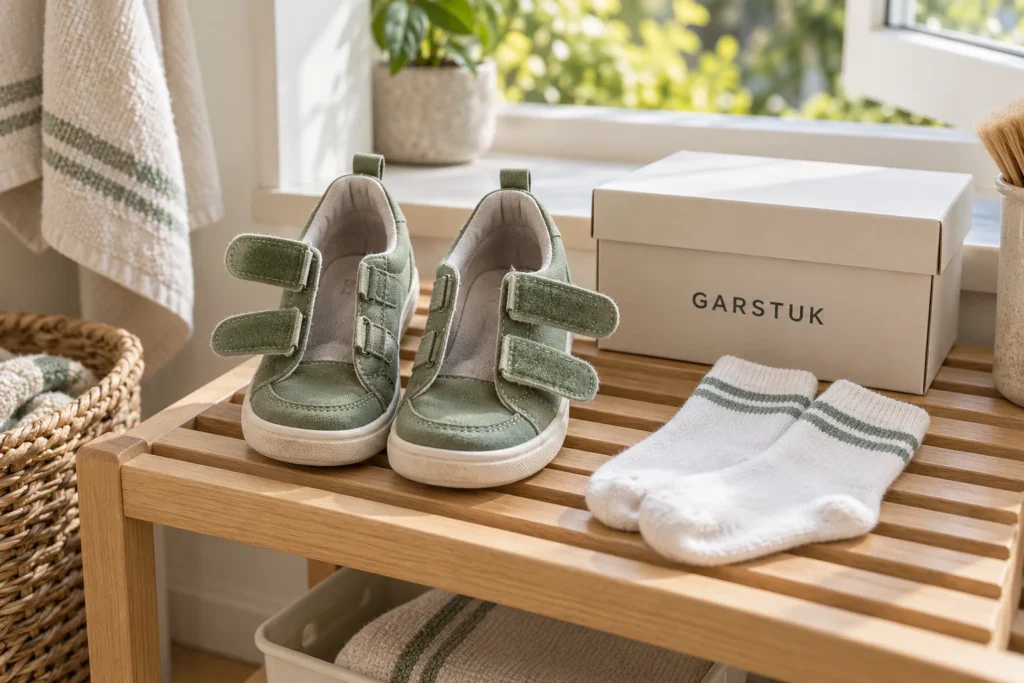
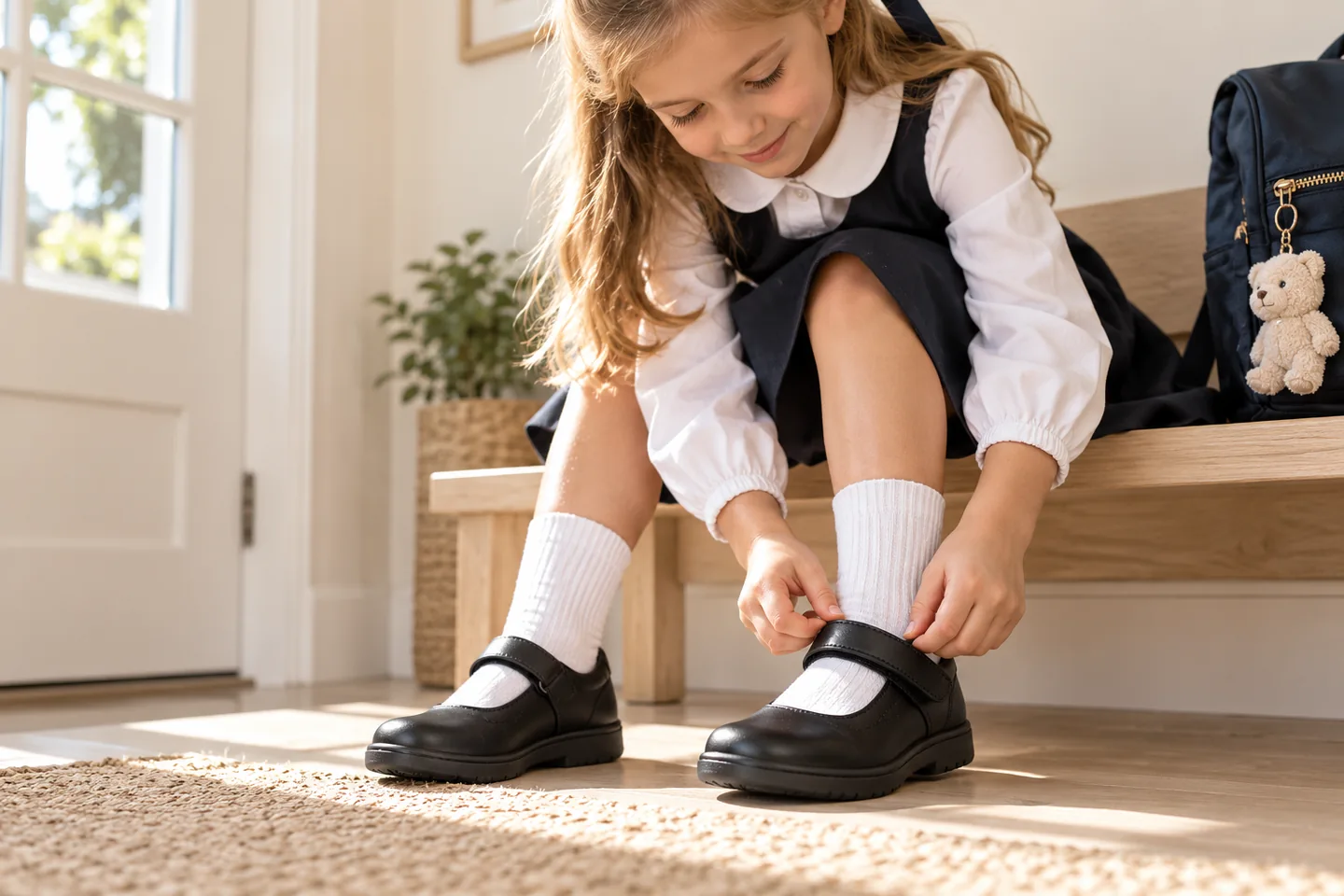
Independence is especially important at nursery and in the early school years. A hook-and-loop strap is usually quicker and simpler than complicated lacing. A buckle should be easy to adjust while remaining securely closed.
If the child chooses lace-up shoes, make sure they can tie the laces and control the length of the ends. Untied laces create a risk of being stepped on while moving.
The sole: stability, flexibility, and floor marks
The sole should provide stability on smooth floors and allow the foot to bend naturally during each step. A construction that is too heavy or stiff can restrict comfortable movement.
Some schools ask for soles that do not leave visible marks. This cannot be determined reliably from colour alone, so review the product description and the institution’s requirements.
Materials and all-day comfort
Indoor shoes are worn for long periods, so neat internal finishing and a material suited to the classroom or nursery temperature are important. Check that the lining lies flat, the insole does not bunch up, and there are no rough seams inside.
A pair that is too warm may cause overheating and quickly become damp. After each day, remove indoor shoes from any closed bag, air them, and dry them at room temperature if needed.
What to check before buying
- The school or nursery rules.
- The length and width of both feet.
- The fit while walking, turning, and squatting.
- How easy the fastening is for the child to use.
- The condition of the inside and insole.
- The flexibility and grip of the sole.
- The weight of the pair and ease of carrying.
How to store indoor shoes at school or nursery
Use a labelled bag or container if the rules allow it. Do not put wet socks or sports clothes inside with the shoes. Take the pair home periodically for cleaning, complete drying, and a size check.
Inspect indoor shoes as often as outdoor footwear. Parents see the indoor pair less frequently and may otherwise notice wear, fastening damage, or an outgrown size too late.
Common mistakes
- buying without checking the institution’s rules;
- choosing by appearance alone;
- leaving too much room “to grow”;
- trying on only one shoe;
- leaving the pair in a closed bag every day;
- not checking the size during the school year.
Final checklist
Good indoor shoes suit the child’s foot length and width, hold the heel securely, do not squeeze the toes, fasten easily, and provide stability on the floor. They also meet the institution’s rules and suit the indoor conditions.
Explore styles in the GARSTUK school shoes section, and before choosing a size read our guide to the proper fit of children’s shoes.