In this guide
Build a child’s travel shoe list around what they will do: the journey, walks, indoor time, water activities or a specific sports session. A season name cannot describe the whole itinerary. This guide helps you check existing pairs, give each a purpose and organise changes of footwear without prescribing the same number of pairs for every family.
Start with a typical day away
Write down one day’s sequence: getting to transport, time travelling, a walk after arrival and an evening indoors. Add any different days, such as an excursion or organised activity. Identify likely surfaces, expected weather and the destination’s own requirements.
Consider where footwear can dry and whether a spare pair will be accessible. A weekend with relatives and a trip that moves between places every day need different arrangements, even when the forecast is similar.
Give every pair a clear purpose
Dorset HealthCare’s children’s footwear advice recommends matching footwear to the activity and notes that wellies and flip-flops are unsuitable for long walks. Label each pair’s role on your list: everyday walking, an indoor change or a particular activity.
Cover the itinerary’s practical needs before adding a pair for an extra outfit. For a spare, ask whether it can do the job if the main pair is wet or unavailable. Check material and performance information for the exact style; our materials and weather guide suggests useful questions.
Check the fit before departure
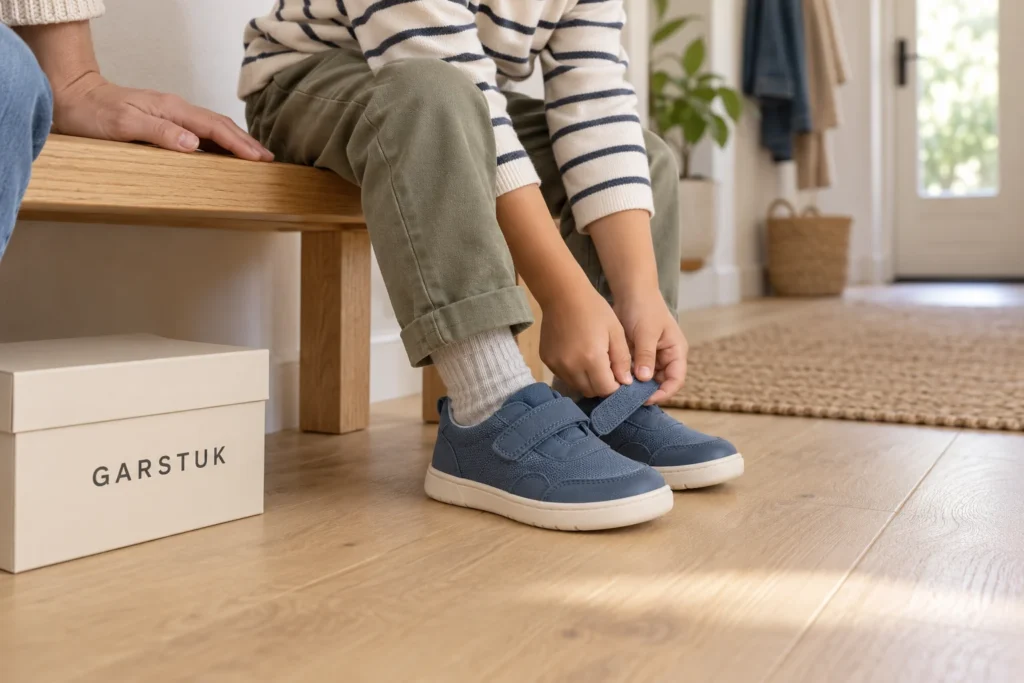
Take out every selected pair and fit both shoes with the socks the child will use. Check the fastenings, heel position and comfort during ordinary steps. Shoes saved from the previous trip may have been outgrown, and the spare pair needs a fitting too.
The NHS guide to blisters recommends comfortable, well-fitting footwear and wearing new shoes for short periods until comfortable. Arrange an initial trial before a long excursion. Pain or rubbing calls for a different decision; use our size and fitting guide to review the pair.
Plan the pair for the journey
Choose suitable shoes that an adult can check easily and the child can put on with the help they need. Keep any essential change items accessible during the journey. Before putting a spare pair in luggage, check that both shoes are actually there.
Verify baggage and screening requirements with your own carrier and airport. Procedures from one route may not apply elsewhere. If shoes are removed, smooth the socks, position the heels and readjust the fastenings before continuing outside.
Pack dry pairs separately from clothing
Clean the shoes using a permitted method and let them dry before packing. Give clean socks their own space and shield clothing from dirty soles. Arrange the pair so that heavy objects do not crush the heel or fastening.
Prepare a way to separate wet or dirty items temporarily on the return journey. On arrival, remove damp shoes from closed packaging and care for them according to the style instructions. Find those instructions in advance; our care guide covers general cleaning and storage steps.
Match the pair to the day’s actual conditions
Before setting out, consider the real surroundings as well as the forecast: a wet path, a warm indoor venue or a required change of shoes. Ask organisers about their particular activity. A photograph of a similar outsole does not establish suitability for every surface.
Ask about comfort after the first short outings. A painful blister, persistent irritation or another symptom calls for stopping use of the pair causing the problem and seeking appropriate healthcare advice. For prescribed shoes or orthoses, follow the child’s individual professional instructions when planning travel.
Check the list before closing the suitcase
- Each planned activity has suitable footwear.
- Both shoes in every pair have been fitted with the intended socks.
- The spare pair is dry, complete and accessible when it may be needed.
- Care instructions and a drying place at the destination are accounted for.
- Essential change items can be reached during the journey.
Bring only care products that are needed and permitted for the style. Check any transport requirements for those products separately.
Common questions
How many pairs should a child take?
It depends on activities, trip length, drying arrangements and access to a replacement. List the jobs before counting the pairs.
Can brand-new shoes be used on the first day?
Check them at home and on a short, suitable outing first. A long excursion should not be the first test of comfort.
Can wet shoes stay in a travel bag?
Separate them from clean items for transport, then unpack and dry them using a method permitted for that style.
What to ask GARSTUK
Share the style code, activities and expected conditions. Ask about intended use, fastening adjustment and permitted care. Contact GARSTUK on WhatsApp for model information; check the final fit on the child’s feet.
Sources
Sources checked on 15 October 2026. The travel checklist is GARSTUK editorial guidance. The cover is an AI-generated paper-collage illustration, not a depiction of a specific style.