In this guide
In autumn and winter, children’s footwear is not only a practical part of the wardrobe but also a visible element of an outfit. A well-chosen pair helps a child feel comfortable on walks, while travelling, and on the way to school, while making it easier for parents to combine clothes without unnecessary purchases.
The main rule of a seasonal wardrobe is to consider the weather and the child’s activity first, and only then colour and style. Below are clear outfit ideas for dry autumn days, rainy weather, the first frosts, and winter walks.
A basic palette for autumn and winter
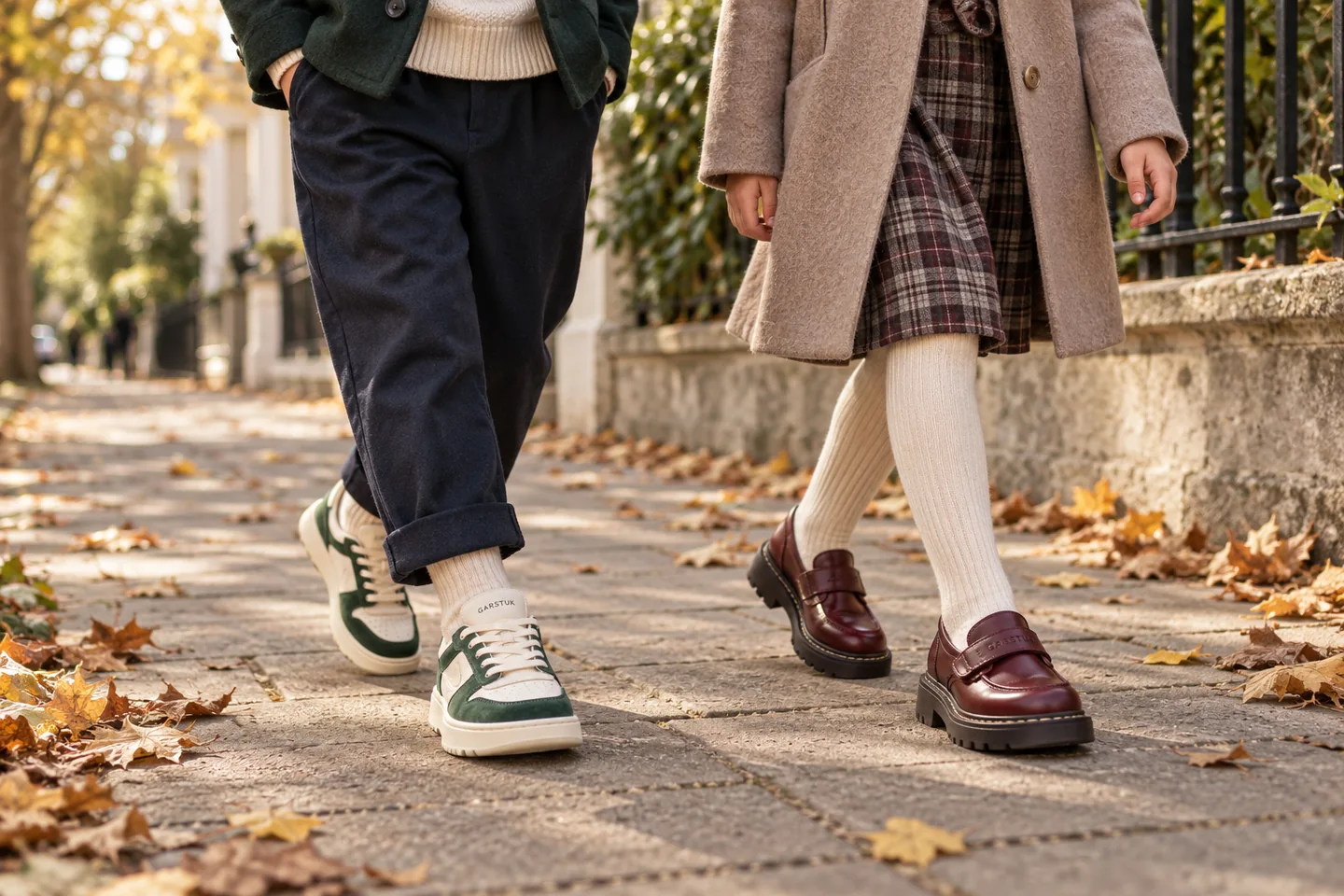
Outfits are easiest to assemble when the footwear works with at least two jackets or snowsuits. Brown, beige, charcoal, navy, burgundy, and muted green are practical choices. These shades pair well with denim, knitwear, and calm-coloured outerwear.
A bright accent can work too. Red, yellow, or blue boots can be echoed by a hat, scarf, gloves, or a small detail on a jacket. The colour does not have to match exactly; a related shade or one shared detail is enough.
An outfit for dry, mild autumn weather
Lightweight trainers, shoes, or low boots work well for dry September days and early October. Pair them with straight jeans, joggers, warm leggings, and a lightweight jacket.
- Neutral trainers, jeans, and a hoodie create a comfortable everyday outfit.
- Beige boots work well with navy trousers and a khaki jacket.
- Burgundy footwear adds colour to a grey coat or plain puffer jacket.
Trouser legs should not cover the sole or slip under the heel. If trousers are too long, they become wet and dirty faster and can interfere with movement.
What to wear in rainy weather
For wet autumn days, look for a water-resistant upper, a textured sole, and clothing that is easy to clean after a walk. Waterproof boots can be paired with sturdy trousers, membrane overtrousers, or a rain set.
If a child wears rubber boots, use suitable socks and do not leave the boots on longer than necessary. Prepare an indoor pair for school or other buildings, because fully waterproof footwear can become too warm inside.
Outfits for the first frosts
During the transition to colder weather, mid-height insulated boots are useful. They work with soft trousers, lined jeans, quilted jackets, and lightweight puffer coats. Socks should suit the temperature without making the footwear tight.
When mornings are cold but afternoons become warmer, use layers: a T-shirt, fleece layer, and jacket are more adaptable than one overly warm jumper. The same applies to feet — suitable footwear with one moderately warm sock is better than a tight pair filled with several socks.
A winter city outfit
For the journey to school, family trips, and relaxed walks, choose winter boots with secure fastening and a stable sole. They coordinate naturally with a puffer jacket, parka, insulated trousers, or a snowsuit.
To make the outfit feel coordinated, repeat the footwear colour in one small detail such as mittens, a scarf, a hat, or a backpack. Light footwear looks attractive with pastel outerwear but needs more frequent care. Dark models are more practical in slush and on streets treated with de-icing products.
An outfit for active winter play
For playing in snow, warmth, sole grip, and moisture protection matter most. Snowsuit legs should sit over or around the boot shaft according to the clothing design. They should not ride up and allow snow to reach the socks.
Check whether the child can squat, run, and climb stairs comfortably. Footwear that is too heavy or trousers that are too bulky can restrict movement even when the outfit looks good.
How to combine socks and tights
Choose socks according to the temperature and the space inside the footwear. They should lie flat, without bunching, and should not squeeze the lower leg. One suitable sock is often enough with insulated footwear.
Thick tights work well with dresses and skirts, but their thickness must be considered during fitting. If the child will wear boots with tights and additional socks, check the fit in that exact combination.
Five mistakes in autumn-winter outfits
- choosing footwear only by colour and ignoring the weather;
- wearing several thick socks inside a tight pair;
- leaving trouser legs too long around the sole;
- using the same footwear outdoors and in warm indoor spaces;
- forgetting to dry and clean footwear after a walk.
Final checklist
A good autumn or winter outfit begins with correctly sized footwear that suits the weather and the child’s activity. Then choose trousers, outerwear, and accessories that do not restrict movement and provide protection from moisture and cold.
Explore suitable styles in the GARSTUK catalogue. Before buying, also read our guide to choosing children’s footwear for different seasons.