In this guide
The material of children’s footwear affects moisture protection, warmth, weight, and ease of care. However, no single option suits every type of weather: shoes for a dry classroom have different requirements from boots for slush or a long winter walk.
To make a practical choice, assess not only the material name but the entire construction: seams, lining, outsole, fastening, and the manufacturer’s guidance.
Natural leather
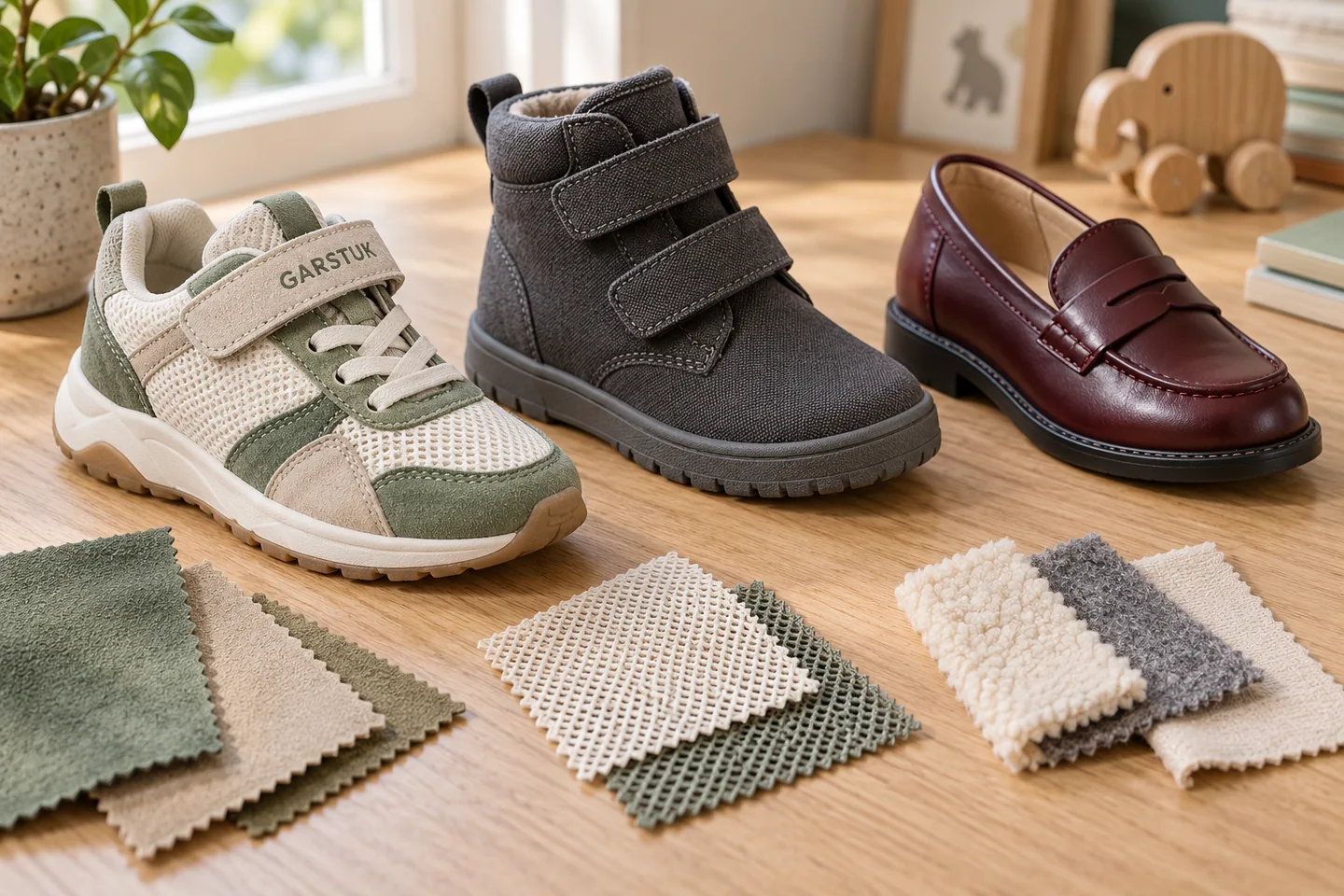
Leather can adapt to the shape of the foot, remains reasonably durable, and lasts well with proper care. It suits city footwear and many mid-season styles. Its properties depend on the treatment, thickness, and construction of the specific pair.
Leather footwear needs regular cleaning and a care product compatible with the material. Even high-quality leather is not automatically fully waterproof: moisture may enter through seams, the tongue, or the fastening area.
Synthetic leather
Modern synthetic materials can be lightweight, retain their shape, and clean easily. Their characteristics vary considerably, so check flexibility, the quality of flex points, and the interior finish instead of judging only by appearance.
If the upper releases heat and moisture poorly, the foot may become too warm indoors. Appropriate socks and the option to change from outdoor boots to lightweight indoor shoes are important for all-day wear.
Textiles and mesh
Textiles are often used in trainers and indoor shoes. They help reduce weight, make the upper more flexible, and usually suit dry warm weather or indoor use.
Open mesh allows water through more quickly and offers less protection from cold wind. Check the care guidance before cleaning: not every textile style can be machine washed or dried near a heat source.
Membrane materials
A membrane is used as part of a layered construction and helps combine protection from external moisture with the release of water vapour. The final performance depends on the quality of the whole shoe, sealed seams, and correct care.
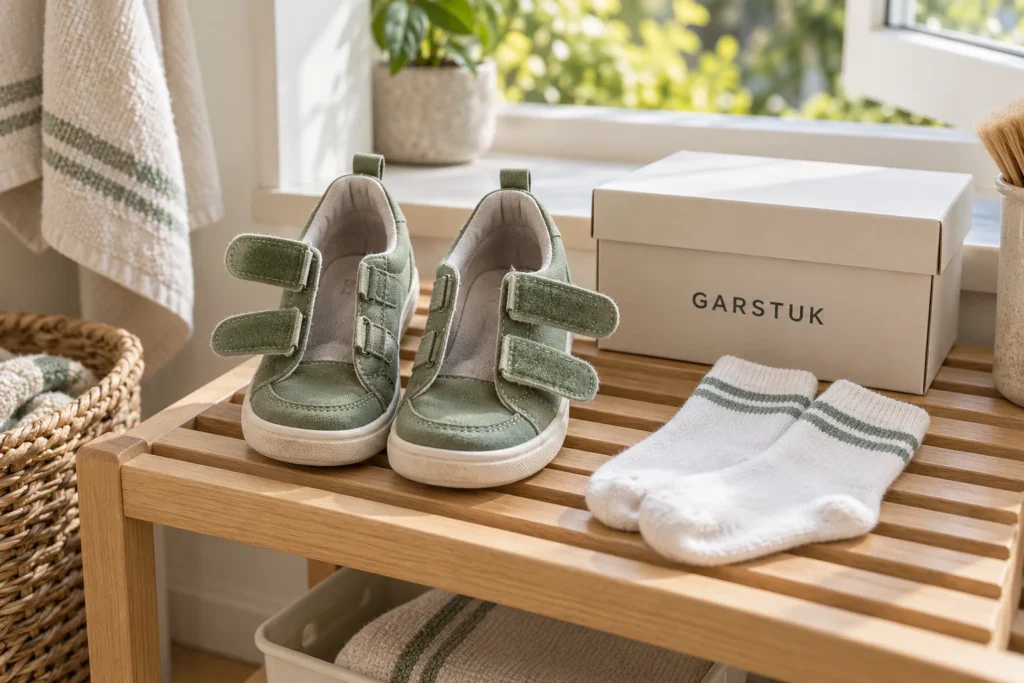
Dirt and unsuitable products can reduce the performance of the outer layer. It is also important to choose socks that do not trap excess moisture against the skin and to dry the pair completely at room temperature.
Rubber and polymer materials
Rubber boots and moulded polymer footwear provide good protection from puddles and wet mud. They are useful for specific weather conditions but are generally not intended for an entire day in a warm room.
In cold weather, consider the lining and temperature guidance. Check that the outsole has not become excessively stiff, and use a sock of suitable thickness without making the footwear tight.
Insulation and linings
Wool, blended materials, fleece, and synthetic insulation differ in thickness, drying speed, and warmth retention. A thick lining does not always mean the footwear will be warmer in every situation.
For an active child, an excessively warm pair may lead to overheating and moisture inside. Calm, extended walks may require more protection. A removable insole makes drying and inspection easier.
The outsole matters as much as the upper
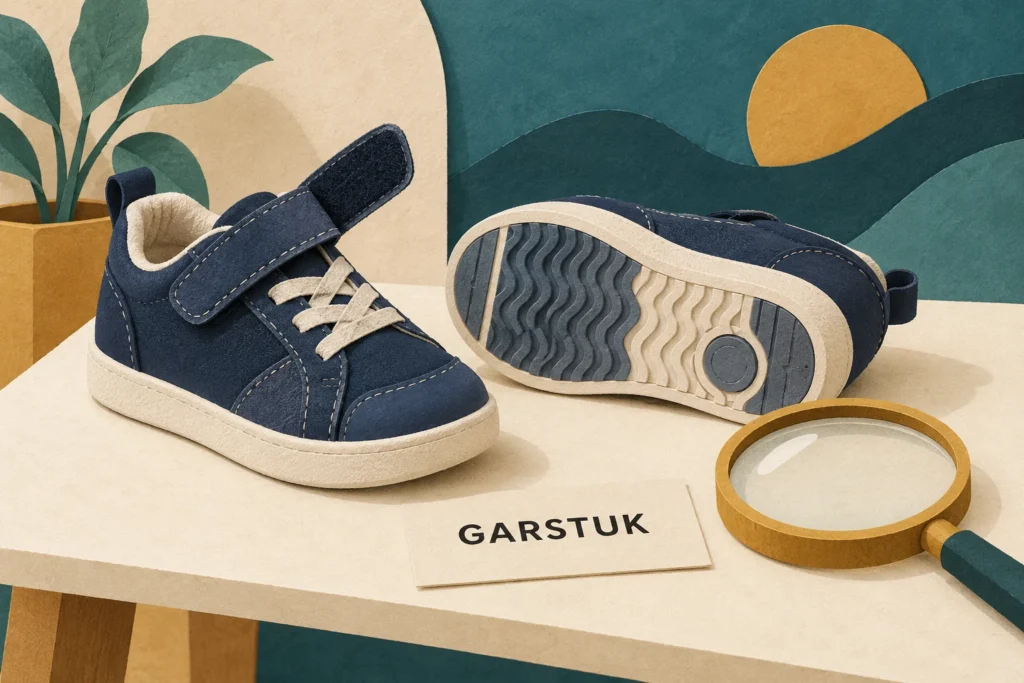
Wet pavement and snow require a defined tread pattern. The outsole should flex at the forefoot, where the foot naturally rolls, but should not twist without resistance in every direction.
EVA helps reduce weight and cushion steps, rubber often provides useful grip and durability, and a combined outsole may bring several properties together. Assess the finished pair rather than the material name alone.
What to choose for different conditions
- For a dry school or nursery: a lightweight upper, flexible outsole, and good ventilation.
- For rainy autumn weather: a moisture-resistant upper, protected fastening area, and textured outsole.
- For slush: easy-to-clean materials and construction that limits water entry through the lower part.
- For freezing weather: suitable insulation, a stable outsole, and enough room for a seasonal sock.
- For active walks: low weight, secure fastening, and flexibility without losing stability.
Five questions before buying
- What temperature and walking duration is the footwear intended for?
- Will the child move actively or spend more time standing and sitting?
- How does the material handle moisture, dirt, and regular cleaning?
- Can the insole be removed and the footwear opened fully for drying?
- Does the pair remain comfortable with the appropriate seasonal sock?
Conclusion
The best material is the one that suits the weather, the child’s activity, and the wearing routine. Compare the properties of the whole pair, check the fit, and review the care instructions in advance. This supports comfort and helps keep footwear in good condition for longer.
View seasonal styles in the GARSTUK catalogue and save our guide to cleaning, drying, and storing children’s footwear.