In this guide
Children’s shoes face dust, moisture, sand, and active play every day. Even a quality pair will lose its appearance and shape faster if it is left dirty, dried next to a strong heat source, or treated with an unsuitable product.
Proper care does not require a complicated collection of accessories. Regular attention, gentle cleaning, and following the recommendations for the specific material matter more. Below is a practical routine for everyday, school, mid-season, and winter children’s footwear.
Why children’s shoes should be cleaned regularly
Fresh dirt is usually easier to remove than dried stains. Regular cleaning helps preserve the upper, prevents sand from collecting around seams, and makes it easier to notice wear on the sole, insole, or fastening.
After each wear, simply inspect the pair, shake out any sand, wipe away dirt, and let the shoes air. Carry out a deeper clean when needed, taking the material and manufacturer’s instructions into account.
A daily care routine
- Undo hook-and-loop straps, zips, or laces and remove the shoes carefully.
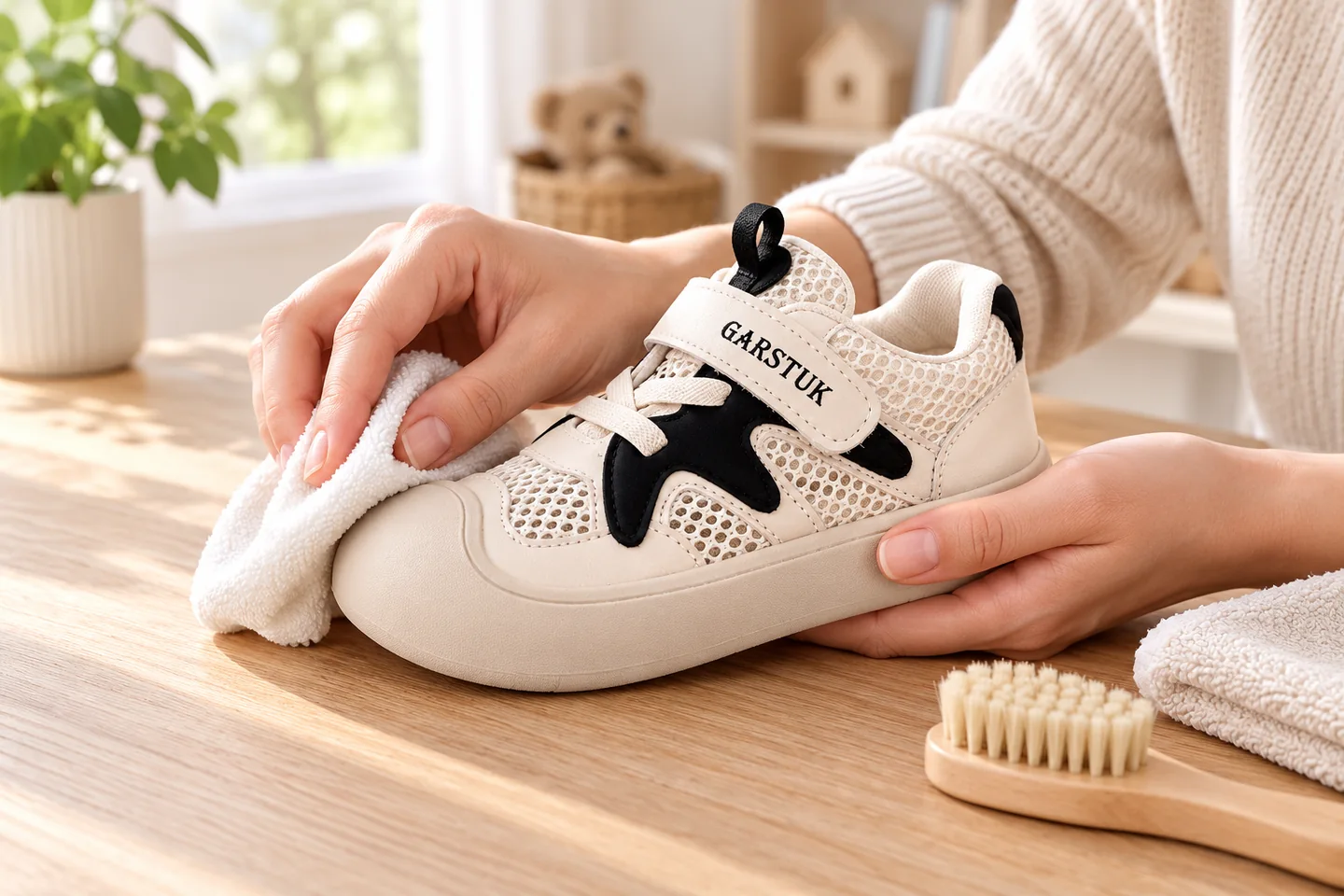
- Remove dry sand and soil with a soft brush or cloth.
- Wipe the sole and welt edge with a damp cloth without soaking the upper.
- Remove the insoles if the construction and instructions allow it.
- Leave the pair to air and dry at room temperature.
- Before the next wear, make sure the inside is completely dry.
If the child is caught in heavy rain or steps into a deep puddle, remove the dirt first and then blot away moisture with a soft cloth. Do not rub wet material too vigorously, as this may damage the finish or leave visible marks.
How to care for different materials
Natural leather
First remove dust with a soft brush or slightly damp cloth. Once dry, apply a small amount of a product intended specifically for natural leather. Test it on an inconspicuous area—the colour and texture should not change.
Artificial leather and synthetic materials
A soft damp cloth is usually sufficient. Harsh solvents, bleach, and stiff brushes can damage the surface. Use only products permitted by the manufacturer.
Textiles and trainers
Remove dry dust with a brush and treat local stains with a mild soap solution. Do not put the pair in a washing machine unless the label or instructions explicitly allow it: water, heat, and spinning can damage adhesive, shape, and decorative elements.
Membrane footwear
For membrane styles, it is especially important to use suitable products that do not clog the material’s structure. Ordinary greasy cream may reduce surface performance. Follow the label and the recommendations in the specific product description.
Rubber footwear and beach shoes
Rinse the outside with cool water, remove sand, and wipe it dry. Even water-resistant styles need to be aired inside. After the pool or sea, always rinse away chlorinated or salty water.
How to dry children’s shoes correctly
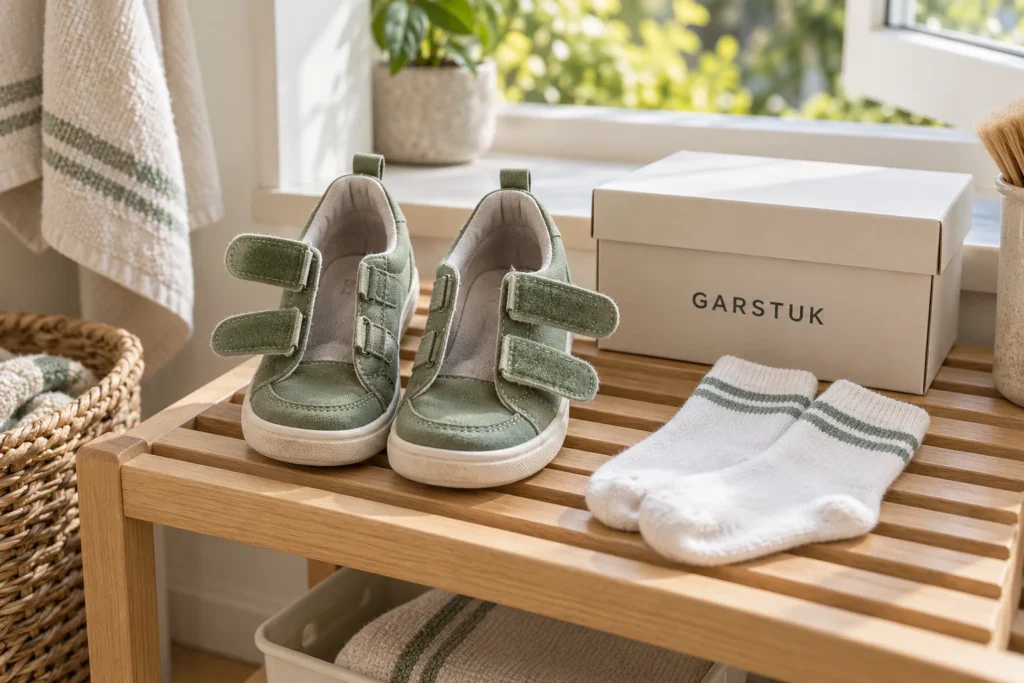
The safest method is natural drying at room temperature with good air circulation. Open the shoes, loosen the laces, and position the pair so that air can reach the inside.
- Do not place shoes directly against a radiator, heater, or hot pipe.
- Do not use a hair dryer on a high heat setting.
- Do not close a wet pair inside a bag or cupboard.
- Do not wear the shoes while the lining or insole remains damp.
Strong heat can deform the upper, make materials stiff, and weaken adhesive joints. A completely soaked pair may need more than a day to dry. A spare pair is especially useful during rainy seasons.
How to reduce odour and keep shoes fresh
Let the shoes air fully after wear. Check and dry the insoles regularly, change socks, and avoid using the same damp pair on consecutive days. Choose odour-control products only if they are suitable for children’s shoes and the specific material.
If a strong odour quickly returns, check whether the shoes remain damp inside and whether they suit the season. Pronounced sweating, skin irritation, or persistent discomfort should be discussed with a healthcare professional.
Storage between seasons
Clean and dry the pair completely before storage. Inspect the sole, seams, hook-and-loop straps, and zips. Place the shoes in a dry box or fabric bag and store them in a ventilated place away from direct sunlight and heat sources.
Do not compress soft shoes under heavy items. To help maintain their shape, use clean paper without bright printing or suitable shoe shapers. Check the size again before the next season, because the child’s feet may have grown during storage.
Common care mistakes
- using one universal product for every material;
- applying cream or spray to a dirty surface;
- drying shoes on a radiator;
- machine-washing any pair without the manufacturer’s approval;
- putting damp shoes into a closed cupboard;
- continuing to wear a pair with a damaged sole or interior.
Quick checklist
- Remove fresh dirt after wear.
- Choose the cleaning method for the material.
- Dry at room temperature.
- Air the shoes and insoles.
- Store only a clean and dry pair.
- Check condition and size regularly.
You can find a suitable pair in the GARSTUK children’s shoe catalogue. Before ordering, review the materials in the product description and read our guidance on choosing children’s shoes by season.