In this guide
A pair of shoes felt comfortable yesterday, but today your child says it feels tight. Before deciding the size is wrong, check the socks. Thicker fabric, a displaced heel or a fold near the toes can change how the same pair feels.
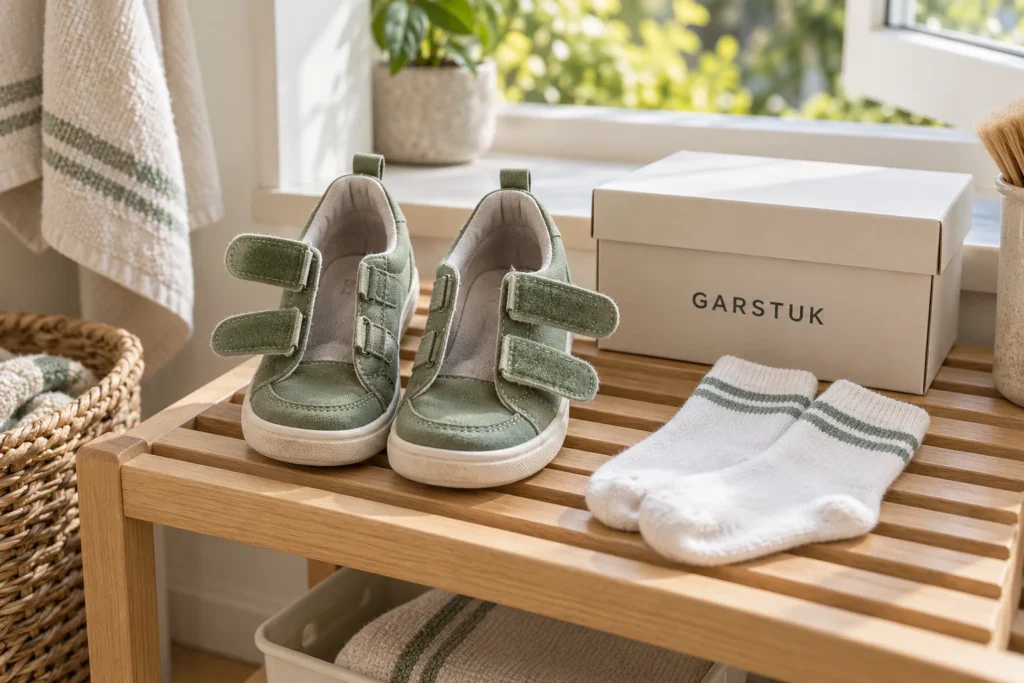
This GARSTUK guide looks at socks as part of shoe fitting: checking them on their own, comparing everyday and winter pairs, and recognising when the shoes need a closer look.
Check the sock first
Dorset HealthCare NHS explains that oversized socks can bunch up and create pressure, while undersized socks can constrict the foot. The size on the packaging is a starting point; check the actual fit on each foot.
- The sock heel sits at the heel rather than under the arch or above the shoe collar.
- The toes can move without stretching tightly against the fabric.
- There are no noticeable folds under the foot or around the toes.
- The cuff holds the sock in place without uncomfortable pressure.
- The toe seam has not shifted underneath the toes.
If a sock feels uncomfortable before the shoe goes on, try another size or shape. A roomier shoe will not fix a sock that is too tight.
Thickness changes the space available
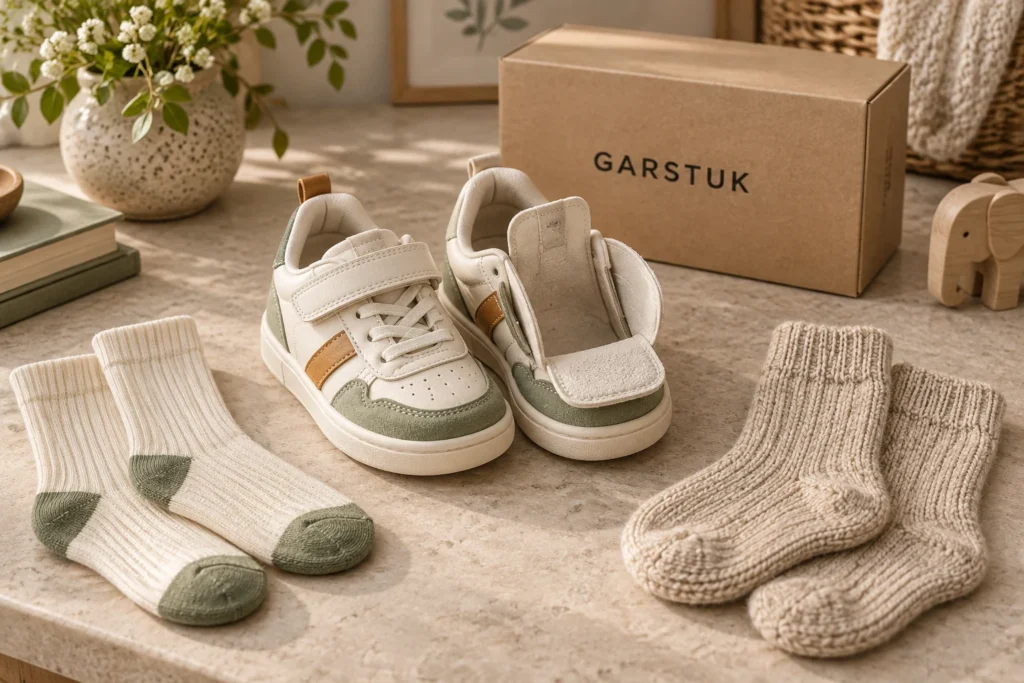
A thick sock takes up some of the shoe’s internal volume. Shoes that work with thin socks can feel tight around the toes or instep with a thicker winter pair. Take the socks your child intends to wear to the fitting.
Compare the two sock options in turn, keeping the shoes and insoles the same. Each time, open the fastenings fully, smooth the sock and seat the heel again. Notice changes in strap tension or pressure and identify the exact area instead of describing everything as “too tight”.
Wearing two pairs of socks is not a universal way to make footwear warmer. Layering can leave less room or introduce extra folds. Assess the footwear’s intended use and insulation for the particular conditions.
Tell a sock fold apart from a shoe fit problem
If the child points to one spot, take the shoe off and inspect the sock. Smooth the fabric, reposition the heel and repeat a short fitting on a level surface. If the discomfort disappears, check whether the sock shifts again during walking.
If pressure returns with socks that fit well, reassess the shoes: both foot lengths, width, instep room, lining and tongue position. Thinner socks cannot make an unsuitable narrow shoe fit correctly. See our guide to signs that shoes are too small.
Choose the material for the activity
Look beyond the large material claim on the packaging. Check the full fibre blend, thickness, seam placement and washing instructions. Active use and a quiet day indoors may suit different socks; judge comfort together with the shoes.
Carry spare dry socks when wet feet are a possibility. Replace wet socks when practical and dry the shoes according to the manufacturer’s instructions. A fibre blend or a warm boot lining alone does not establish protection from water.
A quick check before leaving
- Choose dry socks without visible damage.
- Put them on and smooth the fabric on both feet.
- Open the shoes fully, seat the heels and close the fastenings.
- Ask the child to walk and describe any change around the toes, insteps or heels.
- If anything feels wrong, find the cause before a longer outing.
This is useful when the seasons change or you buy a new pack of socks. Keep measuring the feet regularly as well: growth and a change of socks can happen at the same time.
Common questions
Should winter shoes be a size bigger for thick socks?
Not automatically. Try both shoes with the intended socks and check length and secure fit. A different width or model may work better than simply going up a size.
Can I remove an insole to make room for a thick sock?
Do not use this as an improvised fit adjustment. Check the insole’s purpose and the model’s instructions. Do not change or remove prescribed insoles without advice from the treating professional.
What if pain or skin damage keeps returning?
Stop using the combination that causes pain and seek advice from a healthcare professional. A sock check or a footwear brand’s claims cannot provide a diagnosis.
What to tell a GARSTUK adviser
Give the length of both feet, the usual sock thickness and the location of any pressure or slipping. Explain whether the shoes are for indoors, the school journey or walks. Find general information in our buying advice, and view models in the GARSTUK collection.
Sources
Guidance on sock size: Dorset HealthCare NHS — Footwear advice for children. General information on correctly sized shoes and socks: NHS — Leg and foot problems in children. Sources checked on 5 October 2026. This article does not replace individual medical advice.