In this guide
A first pair of shoes can feel like a purchase tied to a special birthday. A more useful starting point is the child: are they walking independently, where will they walk, and does this particular pair feel comfortable? Here is a practical route from early steps at home to a calm fitting for outdoor shoes.
When a first pair is actually needed
The NHS advises that a child does not need proper shoes until they are walking independently; initially, shoes may be needed only outdoors. Buying them early does not mean a child will learn to walk sooner.
Separate comfort at home from protection outside. On a safe, clean indoor surface, a child can move barefoot. Outdoors, consider cold, uneven ground and objects underfoot. For a child who is not yet walking, choose protection from cold as needed without a tight fit around the foot.
Describe the walk before choosing the shoe
Write down the likely setting: a short walk on a dry path, a cool garden or wetter conditions. That description is more useful than asking for the “most correct” shoe. Ask the seller which conditions the specific model is designed for and how it should be cared for.
A “first steps” label is not evidence of waterproofing or a medical benefit. Check materials and features against information for the actual pair. Extra warmth should not come from squeezing the foot into a tight shoe.
Prepare for an unhurried fitting
- Choose a time when the child is not tired or rushed.
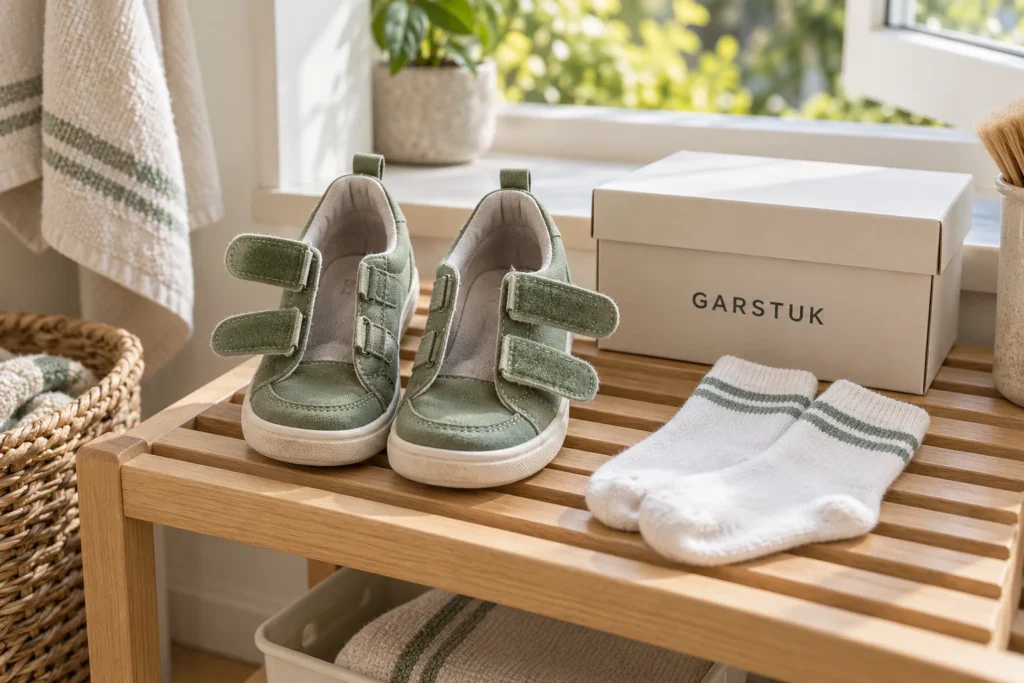
- Bring the socks they will normally wear outdoors.
- Measure both feet and try both shoes.
- Do not choose a size only by age or the number on an earlier pair.
A home measurement is a useful starting point, but it cannot replace a fitting. Length, width and instep shape work together: a shoe with enough length can still press on top of the foot or fail to hold the heel. Our size and fit guide explains the measuring process.
What to look for in the shoe itself
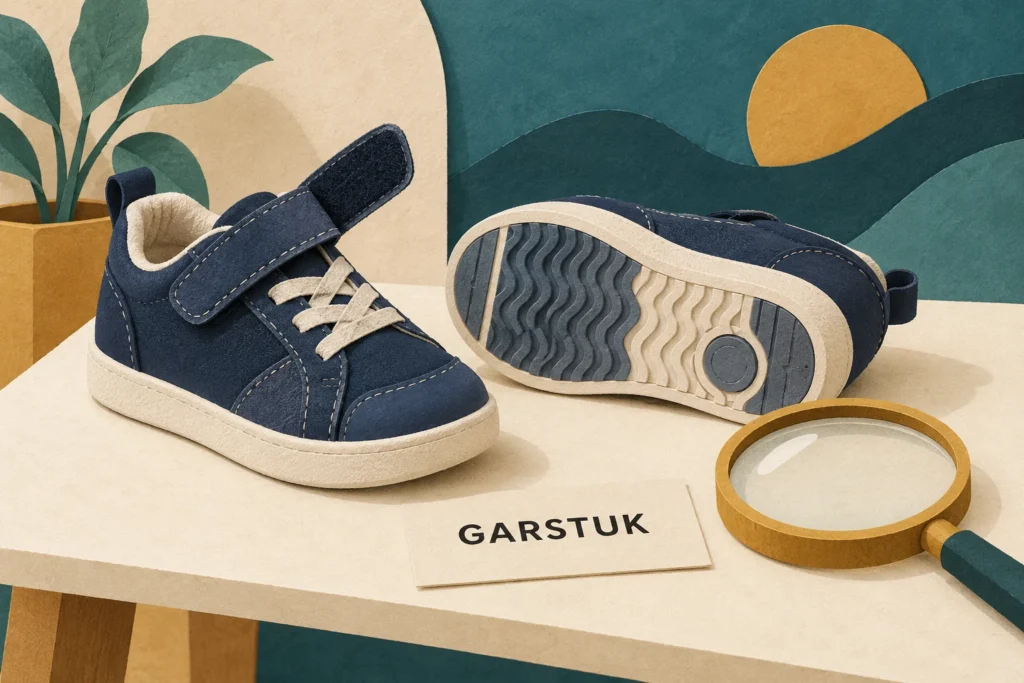
Look for a toe shape that leaves the toes uncompressed and a fastening you can adjust to the foot. APMA guidance highlights light weight, flexible soles and protection for young children. These are selection criteria, rather than a reason to buy a particular brand.
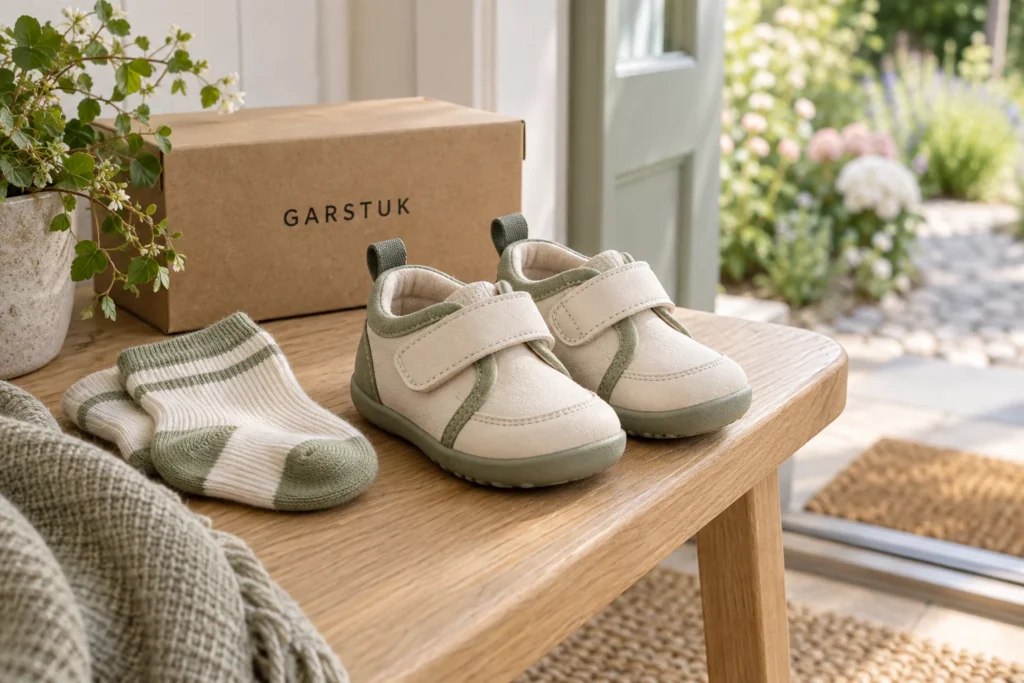
Check how easily the shoe opens, whether the tongue folds under the foot and how much adjustment the closure allows. Tightening a strap excessively to hold on an oversized shoe is not a good solution. See our guide to straps, laces and zips for a closer comparison.
Watch a few familiar steps
Fasten both shoes and let the child take a few normal steps on a safe surface. Observe whether the heel stays in place, whether the shoe slips off and whether it needs repeated adjustment. Afterwards, remove the shoes and look for clear pressure marks or rubbing.
Early walking can be unsteady in its own right. One short episode cannot establish that shoes caused a gait change or support a diagnosis. If the child objects, pause and compare another model. Pain, a persistent limp or concerns about development should be discussed with a clinician.
Keep checking after the purchase
During the first outings, notice comfort when putting shoes on and after taking them off. Repeat the fitting if the pair becomes tight or starts slipping. A child may not yet describe discomfort clearly: calmly check a refusal to wear shoes instead of assuming it is simply a mood.
Do not buy a large amount of spare length to cover an entire season. A useful first pair fits now. Keep the model and care information, and measure the feet again for the next purchase.
Common questions
Should shoes be bought for a first birthday?
A birthday does not decide the need. Independent walking and the intended setting matter more.
Can a child walk barefoot at home?
Yes, where the environment is safe. Check for a clean floor, sharp objects and a comfortable temperature.
Does the first pair have to be “orthopaedic”?
Do not select medical footwear from an advertising label. A clinician should specify footwear and how it is used when there is a medical indication.
What to ask before ordering
Ask about the actual model’s measurements, width options, fitting arrangements and care. You can describe the intended walks and share measurements of both feet with the GARSTUK team on WhatsApp. This helps the discussion, but cannot replace checking the shoes on the child.
Sources
Sources checked on 7 October 2026. This guide helps prepare for a purchase and does not replace individual medical advice.