In this guide
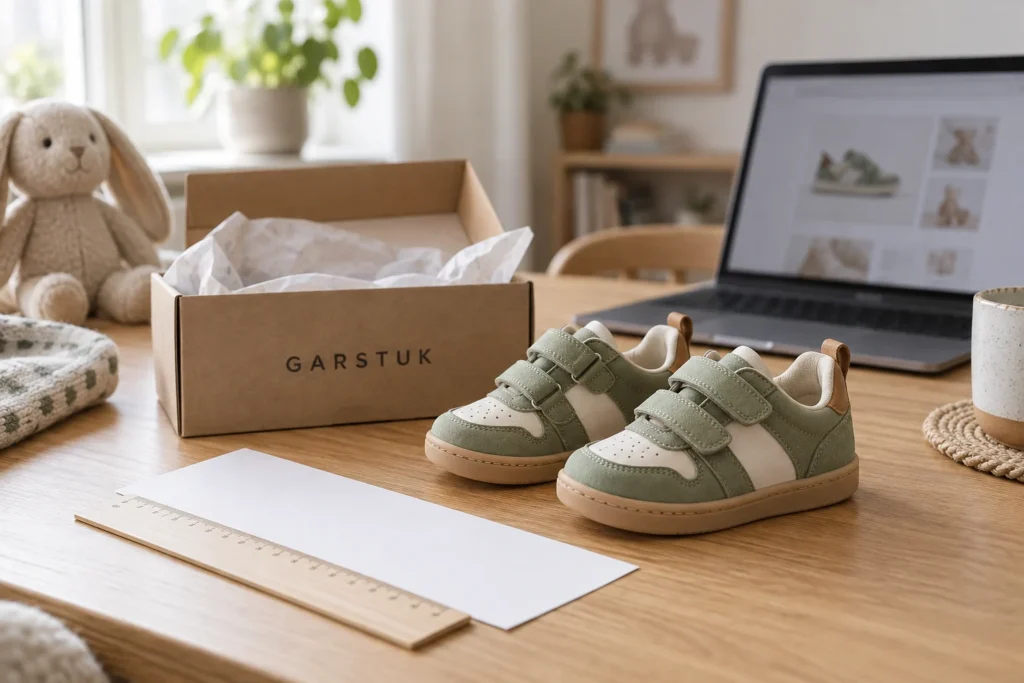
Buying online has two stages: choosing a model from the seller’s information and deciding whether the delivered pair fits at home. A photograph and a familiar size number cannot show the space above the toes or how securely the heel will sit. A short preparation checklist makes the order easier to discuss and the final fitting easier to assess.
Prepare current measurements
Record the length of both feet, the measurement date and the units used. Note previous fitting difficulties, such as pressure over the instep, restricted width or heel slipping. Avoid selecting a size automatically from the child’s age or carrying a measurement from an old order into a new purchase.
Dorset HealthCare NHS recommends measuring both feet for length and width. Our size and fitting guide explains the process. If repeated measurements at home are inconsistent, ask a trained fitter to check them before making a remote selection.
Establish what the chart measures
A number in centimetres might refer to recommended foot length, the length of a removable inlay or another measurement of the model. These are different quantities. Read the column heading and accompanying explanation; if they are missing, ask the seller which measurement is being supplied and how it is taken.
Do not add the same allowance to every chart. A recommendation expressed as foot length may already account for room inside the shoe. Compare your measurements with the chart for the particular style. Matching size numbers on two different boxes do not establish matching fit.
Check the information for the exact style
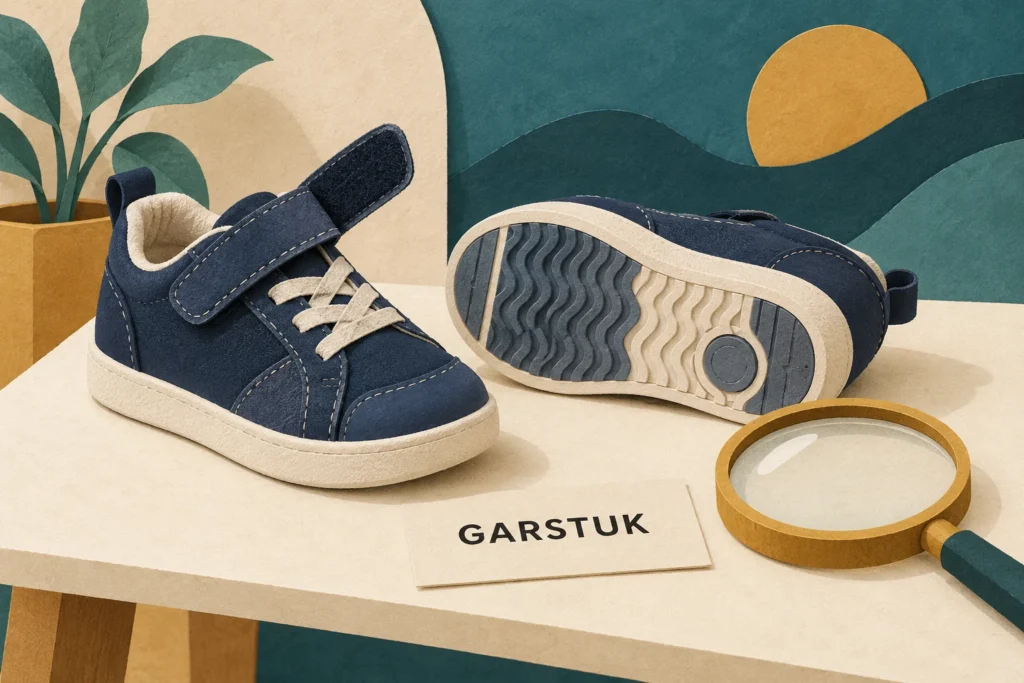
Save the style code and link for the option you selected. Look for views of the upper, side and outsole, together with information on the fastening, interior and intended use. Confirm that the size chart belongs to that style rather than the whole footwear category.
For a broad forefoot or high instep, ask about shape and adjustment. Extra length alone cannot answer those questions. Our width and instep guide helps organise the enquiry. Discuss prescribed orthoses and footwear requirements with the prescribing professional, and tell the seller about relevant shoe requirements before selecting a style.
Confirm the conditions for your order
Before paying, check availability in the selected size, the dispatch location, delivery cost and estimated timing. Keep confirmation of the style and size. Compare the arrival estimate with the date the shoes are actually needed, allowing time for fitting and, where necessary, another selection.
Read the current delivery and returns information and clarify the process for your order. A partner store handles exchanges and returns for purchases made from that seller. For a direct official-site purchase, follow the current GARSTUK policy and confirm the return address with the team before sending a parcel.
Inspect the delivery before fitting
Compare the style code, size and selected option with the order confirmation. Check both shoes for completeness, the condition of fastenings, the inside surface and visible damage. If something differs or needs explanation, photograph the issue and contact the seller with the order reference.
Keep the box, labels and documents while deciding. Avoid cutting components, attaching extra inserts or applying care products to improve the fit of a new pair. Establish whether the original construction suits the child first.
Fit both shoes indoors
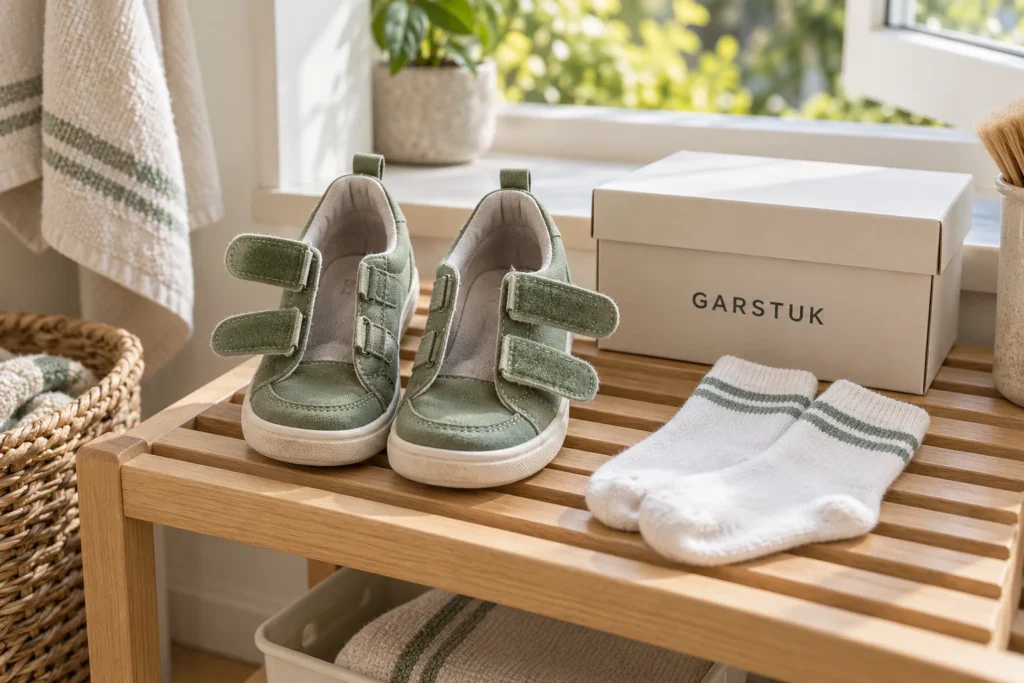
Use a clean, dry surface and the socks intended for the shoes. Open the fastenings fully, position each foot properly and adjust the closures. Ask the child to walk a little at their normal pace. Consider their movements and their own description of comfort together.
Check room for the toes, pressure over the instep, heel security and whether the fastening needs excessive tightening. Decide after indoor fitting before taking the pair outdoors. If a folded sock or a poorly adjusted closure initially interfered, correct that and repeat the check.
Describe the reason a pair does not fit
A concrete observation helps the seller more than “uncomfortable”: for example, a heel lifts at an ordinary walking pace or the upper presses over the instep with normal closure adjustment. Explain which foot has the problem and which socks were used. This helps discuss a different shoe shape rather than automatically increasing the size.
Do not ask a child to tolerate pain in the hope that wear will solve it. Seek professional advice if discomfort persists across different suitable pairs or walking changes.
Common questions
Can I order the usual size without checking again?
It can be a starting point, but current measurements and information for the exact model are still needed. Check the chart and fit the delivered pair.
Is matching the old shoe’s inlay enough?
No. Shape, internal depth and heel position can differ. It also matters whether the seller’s chart measures the foot or a shoe component.
Can I keep the pair if only one foot feels comfortable?
Assess both feet before deciding. Identify the cause of discomfort on the other side rather than using the comfortable shoe as the only reference.
What to send GARSTUK before ordering
Prepare the style code, both foot lengths with measurement date and units, fitting considerations and delivery city. For a delivered pair, add the order reference and a specific fitting observation. Contact the GARSTUK team on WhatsApp to discuss the style, size and order conditions.
Sources and further reading
- Dorset HealthCare NHS: footwear advice for children.
- GARSTUK: delivery and returns.
- Socks and children’s shoe fit.
Sources and order information checked on 11 October 2026. Confirm the details of a particular order before finalising it.