In this guide
The outsole affects stability, freedom of movement, and the overall weight of children’s footwear. An attractive upper and warm lining cannot compensate for a construction that is too slippery, stiff, or heavy.
Before buying, check not only the tread pattern but also the flex point, heel stability, thickness, and whether the outsole suits the weather.
Where the outsole should flex
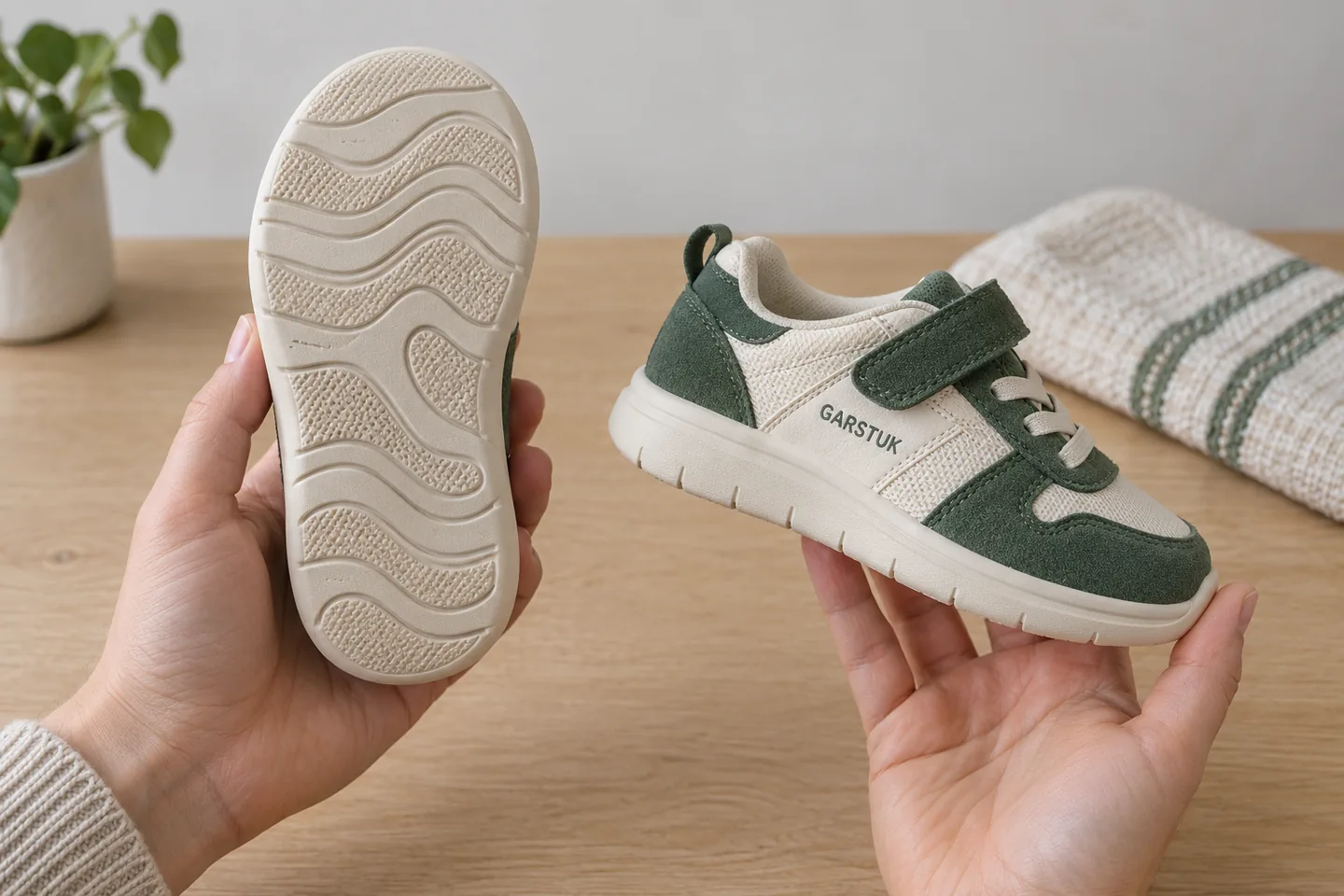
During walking, the foot naturally rolls through the forefoot. The outsole should allow this transition and flex where the toe joints are located rather than folding in the middle.
Check the footwear by hand without using excessive force. An overly stiff model may restrict movement, while an outsole that twists easily in every direction may provide insufficient stability.
How to assess grip
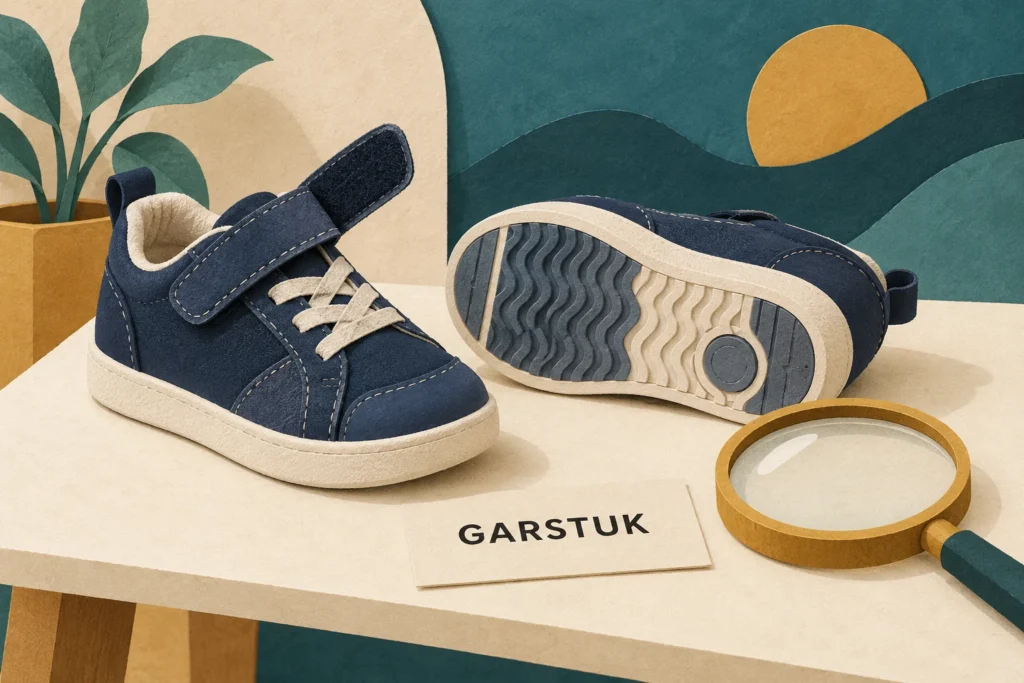
A defined tread pattern is useful for wet pavement, packed snow, and uneven paths. Grooves help move water and dirt away from the contact area, but their shape should suit the intended use of the footwear.
A smooth outsole may be acceptable indoors in dry conditions but not for a winter walk. At the same time, deep tread alone does not guarantee slip resistance: the material and surface condition also matter.
Why weight matters
A child takes many steps during the day, so unnecessary pair weight causes fatigue more quickly. Compare models of the same purpose and size rather than lightweight indoor shoes with insulated boots.
A bulky appearance does not automatically mean durability. Check whether the child can lift the feet easily, walk up stairs, and squat without changing their movements.
Common outsole materials
Rubber
Rubber often provides useful grip and resistance to wear. Its properties depend on composition and thickness: some versions remain flexible in cool weather, while others become stiffer.
EVA
EVA helps reduce weight and cushion each step. It is often used in trainers and combined outsoles. For outdoor use, the contact area needs suitable texture and sufficient wear resistance.
Thermoplastic materials
Thermoplastic rubber and other polymer blends can combine flexibility, shape retention, and durability. Compare the finished footwear because the same material name does not guarantee identical performance.
Check heel stability
Place the pair on a level surface. The footwear should not lean noticeably to one side. The rear part of the outsole should provide a stable base without making the heel feel as if it stands on a narrow platform.
After fitting, watch the child from behind while walking. If the footwear tilts strongly, the heel slips, or the child places the foot unusually, check the size and try a different construction.
Inspect the join between the upper and outsole
There should be no obvious separation, sharp projections, or uneven gaps along the edge. Small production marks may be cosmetic, but the construction should remain even and secure.
For rainy and snowy weather, note the height of the protected lower area. Water often enters not through the outsole material but through seams and joining points.
How to check the outsole during fitting
- Ask the child to walk at a normal pace.
- Check whether the forefoot flexes easily during each step.
- Watch for shuffling or unusually high lifting of the feet.
- Ask the child to squat and step onto a low step.
- Compare the weight and flexibility with another model for the same purpose.
Common selection mistakes
- choosing the deepest tread without considering the intended use;
- assuming a heavy outsole is automatically more durable;
- checking flexibility only by hand without watching the child walk;
- using a smooth indoor outsole on wet outdoor surfaces;
- forgetting to clear dirt and small stones from tread grooves.
Conclusion
A suitable outsole flexes at the forefoot, provides a stable base, suits the weather, and does not make the footwear excessively heavy. Always assess it together with fit and the child’s movement.
View styles in the GARSTUK catalogue and read our guide to choosing children’s footwear materials for different weather conditions.