In this guide
A noticeable smell after a school day is a reason to review the routine around feet, socks and shoes. Start by checking what was actually worn and whether the pair was dry before the outing. A small, repeatable plan is more useful than covering the smell with a new fragrance.
Look at the whole routine
Record which pair was worn, whether socks became damp and where the shoes were left afterwards. Check the interior and fastening without pulling apart the shoe. Note visible damage or unusual changes to the lining. This helps separate a care question about the pair from a concern about the child’s feet.
The NHS guide to smelly feet explains that sweat and bacteria are common contributors, while other causes are possible. Smell alone cannot establish an infection or identify a material fault. Avoid giving the child a diagnosis based on the shoe’s odour.
Set an after-school place for the pair
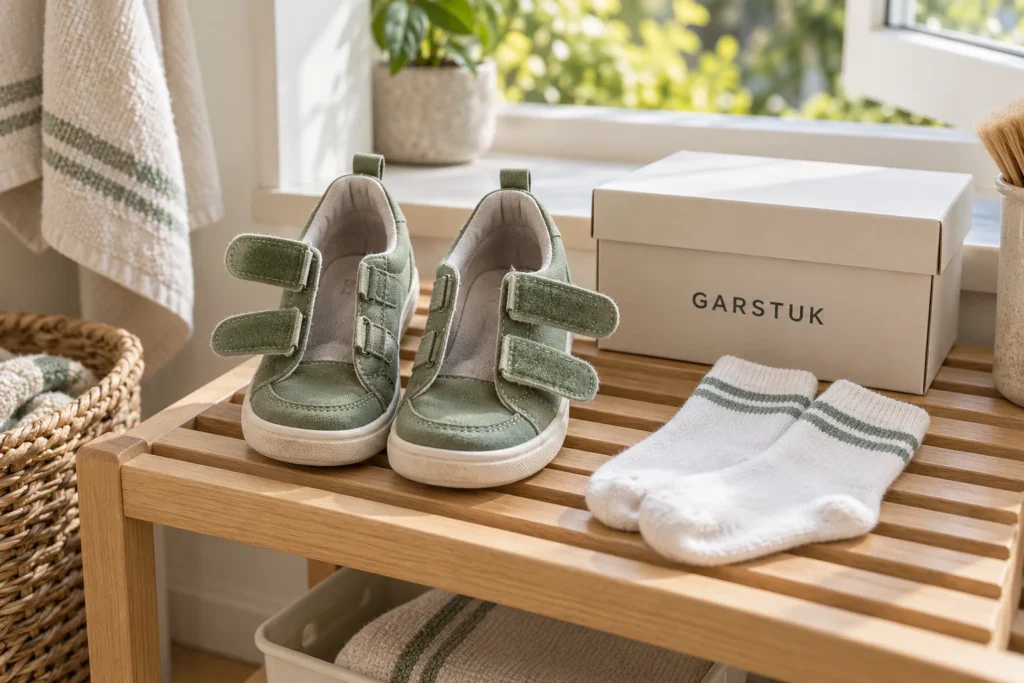
Choose an easy-to-reach place where the shoes can be opened and inspected. Remove them from a closed school bag after the journey. Keep damp footwear separate from clean socks and clothes. A visible place makes it easier for an adult to notice whether the next day’s pair is ready.
For example, use one tray for the pair just worn and another space for a checked, dry pair. These are organisational reminders, not a guarantee of drying in a particular number of hours.
Wear the pair again only when dry
The NHS advises allowing shoes to dry before wearing them again. Follow the care instructions for the complete style: open permitted fastenings and use a suitable ventilated place. If the interior remains damp, choose another suitable dry pair rather than relying on a daily rotation schedule.
Do not assume that every lining or glued component tolerates a heater, hot dryer or washing machine. Remove an insole only if it is designed to be removable and the instructions permit it; put it back correctly once dry. Our shoe care guide covers broader cleaning and storage questions.
Keep foot care simple
The NHS recommends washing feet at least daily and drying them thoroughly, including between the toes. Help the child with the parts they cannot yet manage. Allow time for drying before socks go back on, and make this an ordinary part of washing.
This article does not select medicated products for children. If considering treatment for sweating, skin symptoms or a suspected infection, ask a suitable healthcare professional about the child’s needs rather than adapting an adult product instruction.
Prepare fresh, well-fitting socks
Put a clean pair with the next day’s clothes and change damp socks when needed. Keep a spare pair for activities where getting wet is likely. Check that the sock lies smoothly when the shoe is put on, and that the pair is comfortable for the intended outing.
Dorset HealthCare’s children’s footwear advice notes that socks which are too large can bunch and cause pressure, while small ones can constrain the feet. Our socks and shoe fit guide explains what to inspect during fitting.
Clean according to the specific model
Identify the style and its care instructions before cleaning the interior. A fabric appearance does not establish that the entire shoe is washable. Use only an appropriate method for that pair and allow it to dry afterwards. Ask the seller if the instructions are missing or unclear.
Do not mix household chemicals or use a deodorising recipe as a substitute for understanding the model. A scent can mask a change without showing whether the pair is ready to wear. Keep care products out of the child’s reach and follow their actual labels.
Review calmly and seek advice when needed
After repeating the routine, note what changed: dry starting pair, fresh socks, drying place and any symptoms reported by the child. Discuss observations without teasing or blaming. If the smell is not improving with self-care or affects daily life, the NHS recommends seeking medical advice.
Pain, persistent itching or visible skin changes deserve their own assessment; replacing a shoe cannot establish the cause. For a damaged lining or an unexplained change in a particular pair, send the seller clear photographs and the style information.
Common questions
Is a second pair enough to solve the problem?
It can help organise drying, but readiness depends on the actual pair being dry and suitable to wear. Review socks and foot care too.
Should we spray the shoes before every outing?
First check permitted care and the product’s intended use. A fragrance is not evidence that the shoes are dry or that a skin concern has been addressed.
Does persistent odour mean the child needs different materials?
Do not infer a single cause from smell. Record the routine and ask for advice about the pair or the child’s symptoms as appropriate.
Ask GARSTUK about care
Send the style code, the part to be cleaned and a description of the current method. Ask whether the insole is removable and which cleaning and drying instructions apply. Contact GARSTUK on WhatsApp for model information; persistent foot symptoms belong with a healthcare professional.
Sources
Sources checked on 13 October 2026. The cover is an AI-generated editorial illustration; it does not claim antibacterial performance or show a specific GARSTUK style.