In this guide
Putting on shoes combines several small tasks: finding the right shoe, opening it, positioning the foot and closing the fastening. A child may manage one part and still need help with another. A useful family routine gives the child a clear job and time to try, while an adult checks that the finished pair fits comfortably.
Choose one step to practise
Watch what happens with the child’s usual pair. Is the difficulty opening the strap, getting the heel inside, or reaching the fastening? Name the particular step rather than treating the whole attempt as a success or failure. Start with a task the child can see and understand, such as pressing an already positioned strap closed.
Keep the first practice brief enough to end calmly. On a busy morning, an adult can still help with the rest. This separates learning a new movement from the immediate need to leave the house.
Make a predictable practice space
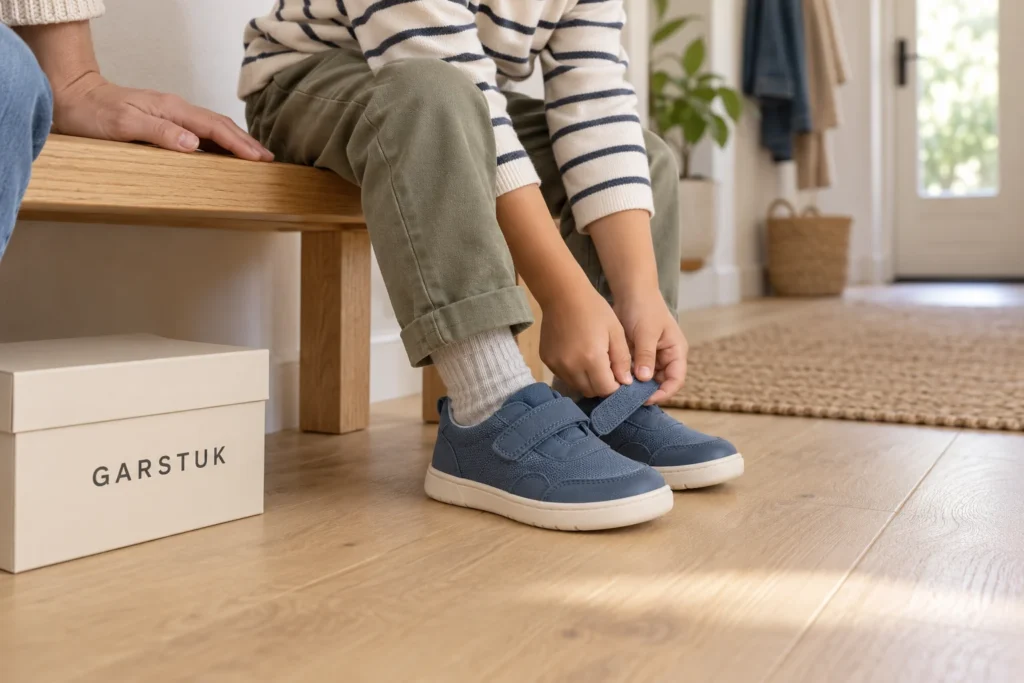
Chesterfield Royal’s children’s occupational therapy guidance suggests practising dressing without a rush, in a quiet setting, with a supported sitting position. Choose a low stable seat that allows the child’s feet to rest securely. Clear bags and loose objects from the practice area.
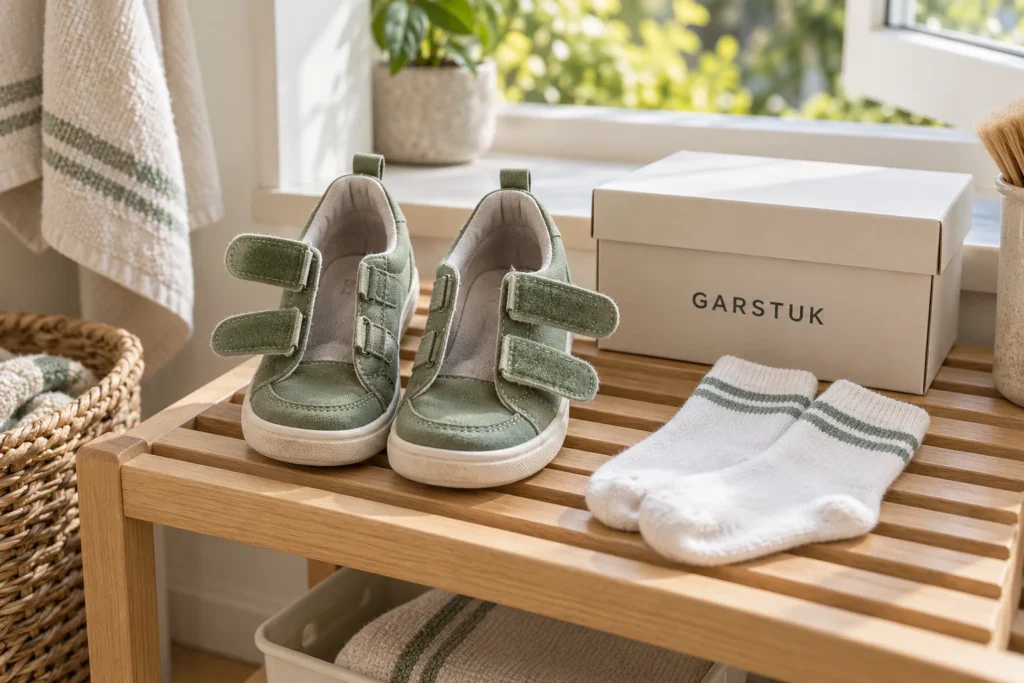
Place the pair in front of the child in the same arrangement each time. Keep the socks and shoes for the outing together. A photograph of the family’s usual setup can remind the child where each item goes; show the actual pair rather than an unfamiliar drawing.
Let the child finish the last step
The Bedfordshire and Luton children’s occupational therapy service describes backward chaining: the adult does the earlier parts, leaving the final action to the child. Once that action is familiar, the child takes on the preceding one as well. Progress follows the child’s confidence rather than a fixed timetable.
For a suitable hook-and-loop shoe, the adult might initially position the foot and strap; the child presses the strap down. Later the child can position it too. Adapt this example to the actual shoe and the child’s ability.
Use short, consistent cues
Describe the current action: “open the strap”, “put your heel in” or “press it closed”. Give one cue, allow the child to try, then offer the next. If the attempt stalls, demonstrate that part slowly with the shoe in view. A whole list of instructions can hide the step that needs help.
Agree on the same words with other adults who help. Recognise a concrete effort, such as opening the shoe independently. Avoid comparisons with siblings or an age deadline; learning opportunities and support needs differ.
Use a suitable pair for everyday wear
Practise with shoes that fit, open sufficiently and have a fastening the child can begin to operate. A shoe that is too large is not a useful shortcut to independence. If pulling it on is difficult, first check that the opening is fully released and the sock is smooth; do not force a tight pair.
Compare fastening operation during a fitting using our fastenings guide. Also check both shoes with the size and fitting guide. Prescribed footwear or orthoses should follow the child’s professional instructions.
Keep left and right easy to discuss
Set the shoes beside each other in their wearing position before starting. Compare their shape together and use the same words for left and right. If the child swaps them, pause and reset the arrangement without making the correction a race.
A family reminder should not alter fit: do not put bulky objects inside the shoes or attach anything that obstructs the fastening. The adult’s final check remains useful while the child is learning.
Check the finished pair before leaving
Look at both feet. Are the heels properly inside, socks smooth and straps comfortably closed? Ask the child to take a few ordinary steps and describe any pressure or rubbing. If the child must grip with the toes or the heel repeatedly slips, revisit the fit rather than pulling the strap harder.
A jammed zip or damaged strap needs attention before practice. Persistent discomfort or a dressing difficulty that prevents ordinary daily activities is a reason to seek suitable professional advice.
Common questions
Should we practise when we are already late?
Use a calmer moment for learning. Help as needed before the outing, and return to the chosen step later.
Can laces be practised away from the feet?
Yes. Chesterfield Royal suggests working with a shoe on a table or lap. A practice shoe does not replace checking the pair worn outside.
How quickly should the child learn?
There is no single timetable in this routine. Increase the task when the current action becomes manageable, and adjust support when needed.
What to ask GARSTUK
Share the style code and explain which action is difficult: opening the shoe, positioning the heel or managing the fastening. Ask about the opening and adjustment of that style. Contact GARSTUK on WhatsApp for model information; choosing a design and learning a skill require an individual trial.
Sources
- Bedfordshire and Luton: supporting your child’s dressing skills.
- Chesterfield Royal: getting dressed.
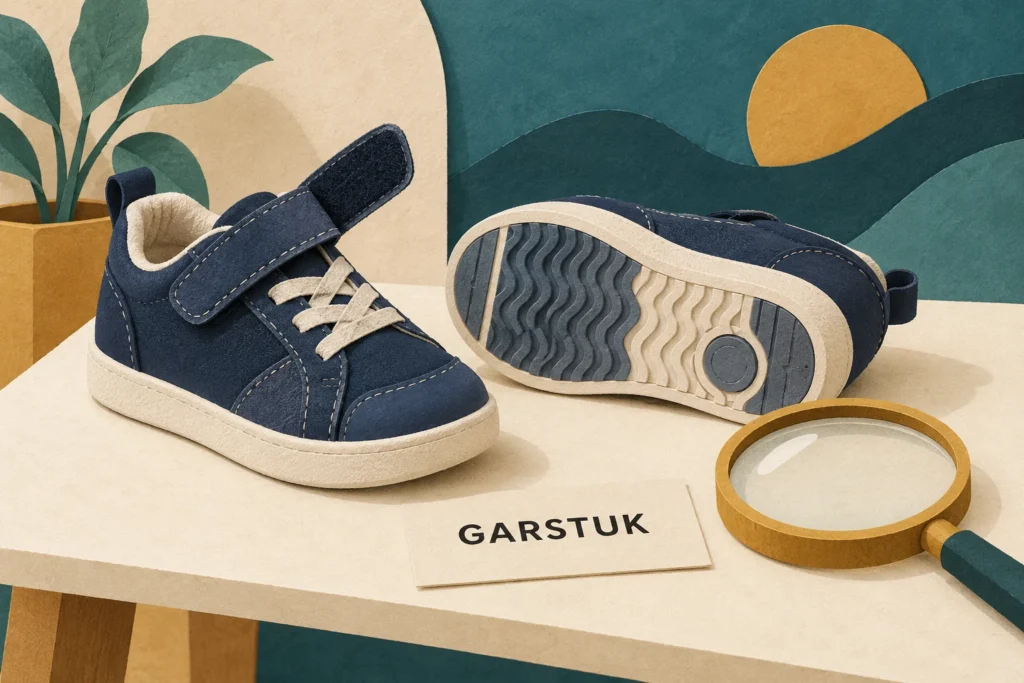
Sources checked on 13 October 2026. The cover is an AI-generated editorial illustration, not a photograph of a specific GARSTUK style.